Puzzle Challenges: How They Stimulate Critical Thinking and Creativity
The Cognitive Benefits of Puzzle Challenges
Puzzle challenges serve as more than just an enjoyable pastime; they are instrumental in cultivating critical thinking and creativity. By engaging with a myriad of puzzles, individuals activate numerous cognitive processes that bolster their ability to think outside the box and solve complex problems. The mental workout provided by puzzles is akin to physical exercise for the brain, making it sharper and more agile.
Let’s delve into some of the compelling features of these engaging challenges:
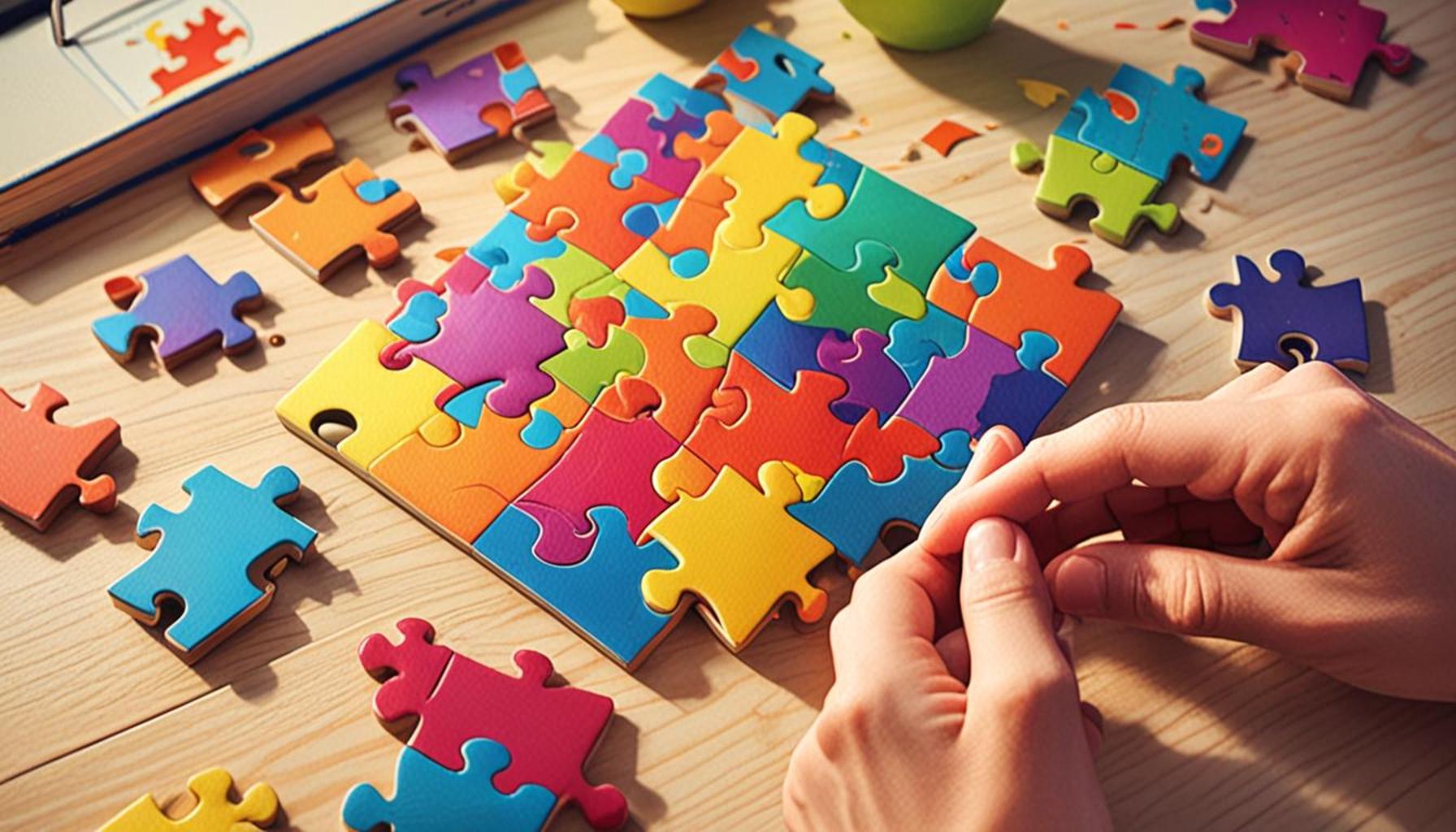
- Variety: The spectrum of puzzles is vast, encompassing everything from traditional crosswords that test vocabulary to logic-intensive sudoku that challenges numerical reasoning. There are also jigsaw puzzles for those who enjoy spatial reasoning, and lateral thinking puzzles that require a more unconventional approach. This diversity ensures that there is a suitable challenge for everyone, regardless of skill level.
- Accessibility: With the surge of technology, puzzles have become increasingly accessible. Numerous websites and apps offer free puzzles that can be enjoyed on-the-go, making it effortless for individuals from all walks of life to engage in this stimulating activity. Public libraries and bookstores often have a variety of puzzle books available, ensuring that even those without internet access can participate.
- Community: Beyond solitary enjoyment, puzzle challenges foster a sense of community. Many puzzlers join online forums or local clubs, discussing strategies, sharing favorite puzzles, and even collaborating on difficult challenges. Competitions and puzzle tournaments are also popular, allowing enthusiasts to connect and showcase their skills.
Regular engagement with puzzles can yield notable benefits, including:
- Improve Analytical Skills: Each puzzle presents a unique set of variables and requires players to dissect the information systematically. This analytical process mirrors the demands of real-life problem-solving, making individuals more adept at discerning patterns and making informed decisions.
- Enhance Creativity: Solving puzzles often requires thinking outside conventional frameworks. By trial and error and exploring different avenues for solutions, individuals enhance their creative thinking, leading to unique ideas that can be applied in various personal and professional settings.
- Boost Memory: Many puzzles, especially those with intricate designs or connections, necessitate a strong memory. As individuals work to remember clues, patterns, and previous solutions, they engage in rigorous mental exercises that strengthen their overall cognitive recall.
In a society increasingly dedicated to innovation and critical thinking, understanding how puzzles contribute to these essential skills is vital. The brain, much like a muscle, thrives on challenge; thus, embracing the realm of puzzles can be a transformative endeavor. As you explore this fascinating world, consider how integrating puzzles into your daily routine could unlock new levels of cognitive potential, enriching both your personal and professional life.
DISCOVER MORE: Click here to enhance your focus and memory
Unlocking the Mind: How Puzzles Enhance Cognitive Skills
As we navigate through an era dominated by vast information and rapid change, the ability to think critically and creatively has never been more essential. Enter the world of puzzle challenges, where individuals are not only entertained but also equipped with valuable cognitive skills. Engaging with puzzles requires mental agility and flexibility, qualities that are foundational for effective problem-solving in both our personal and professional lives.
Puzzles encourage an exploration of different stratagems to uncover solutions. Each puzzle can be likened to a mini-adventure, prompting players to sift through clues and engage in deductive reasoning. This process allows the brain to forge new pathways in thought, fostering a mindset that is less rigid and more adaptable. But how exactly do puzzle challenges encourage critical thought and spark creativity? Here are some ways:
- Pattern Recognition: Puzzles compel individuals to identify connections and discrepancies within a set of information. Whether it’s fitting pieces together in a jigsaw puzzle or deciphering the clues in a riddle, participants develop a keen sense for spotting patterns that can be beneficial in academic studies, professional tasks, and everyday decision-making.
- Sequential Thinking: Many puzzles require players to follow a sequence of steps to arrive at a solution. This sequential reasoning enhances the ability to break down complex problems into manageable parts, a strategy that translates effortlessly into planning projects or analyzing data.
- Risk Assessment: Engaging with challenging puzzles involves trial and error; individuals learn to assess the potential risk of pursuing a particular approach or solution. This cognitive exercise sharpens judgment, which can prove invaluable in situations requiring quick, calculated decisions, such as in business environments or during emergencies.
The impact of puzzles isn’t limited to immediate cognitive benefits—over time, they contribute to long-term mental growth. Research indicates that regular engagement with puzzles may delay cognitive decline in older adults and improve overall neuroplasticity in individuals of all ages. A study conducted by the University of Edinburgh found that adults who frequently engage in mentally stimulating activities, such as puzzles, had a lower risk of developing dementia.
In addition to the cognitive advantages, the emotional and social aspects of puzzle-solving are noteworthy. The thrill of cracking a difficult puzzle can lead to a sense of accomplishment and reward, thus boosting self-esteem. Moreover, shared experiences over puzzles can enhance interpersonal relationships, creating bonds between those who collaborate to overcome challenges together. This collaborative spirit not only makes puzzle-solving enjoyable but also promotes teamwork skills that are crucial in various life scenarios.
In a world deeply intertwined with technology and innovative thinking, exploring how puzzles can enhance critical thinking and creativity presents exciting opportunities. As we continue to live in a rapidly changing landscape, harnessing the power of puzzles to prepare our minds for the challenges ahead becomes not just a hobby, but a necessity.
Puzzle Challenges: How They Stimulate Critical Thinking and Creativity
Puzzle challenges serve as an engaging method to enhance cognitive abilities. They ignite curiosity and foster a willingness to explore various problem-solving methods. When individuals engage with puzzles, they are compelled to think outside the box, which directly correlates to improved creativity. The mechanisms of problem-solving involved in puzzles stimulate different regions of the brain, enabling individuals to develop unique approaches to challenges.Moreover, puzzles often present scenarios requiring strategic thinking and foresight. For instance, puzzles that involve assembly or sequencing encourage players to plan their actions and anticipate outcomes. Such activities can translate to real-world situations where critical thinking is paramount. From navigating complex workplace challenges to enhancing personal decision-making, the skills acquired through puzzle challenges have far-reaching implications.Incorporating puzzle games into daily routines can also provide immense joy and a sense of accomplishment. This emotional engagement is vital in maintaining motivation and promoting sustained intellectual growth. Moreover, the shared experience of solving puzzles in group settings offers opportunities for collaboration and communication, essential skills in both educational and professional contexts.To expand on the benefits of these challenges, let’s take a look at the advantages that puzzle challenges provide, summarized in the following table.
| Category | Benefits |
|---|---|
| Cognitive Development | Enhances critical thinking skills and problem-solving capabilities crucial for personal and professional growth. |
| Creativity Boost | Encourages innovative thinking by allowing individuals to explore diverse strategies and solutions. |
Engaging in puzzle challenges can significantly shape one’s ability to think critically and creatively. As you make puzzles a part of your routine, consider how they transform not only your thought processes but also your everyday life decisions.
DISCOVER MORE: Click here to enhance your cognitive skills
The Puzzle Paradigm: An Innovation in Learning and Development
In today’s educational landscape, the incorporation of puzzle challenges within curriculum designs is gaining momentum as a vehicle for enhancing critical thinking and creativity. This trend reflects an understanding that education is not just about rote memorization but fostering a mindset that embraces exploration. Teachers and educators are beginning to prioritize problem-solving skills through interactive methods, recognizing that puzzles serve as a dynamic tool for engaging students’ minds in a way traditional forms of instruction may not.
One prominent method gaining traction in classrooms is the use of escape rooms as educational puzzles. Originally a form of entertainment, escape rooms require teams to work collaboratively to solve a series of challenges within a set timeframe. These immersive environments exercise not only cognitive skills but also emotional intelligence, as players must communicate effectively and manage conflict under pressure. Many schools across the United States are adopting this model, integrating it into subjects like science, history, and mathematics, fostering a love for learning while enhancing critical thought.
- Interdisciplinary Learning: Puzzles often require knowledge from multiple disciplines, fostering an interdisciplinary approach to learning. A math puzzle might incorporate geometry and logic, while a language riddle could utilize vocabulary and reasoning. This holistic learning experience mirrors real-world situations and equips students with versatile skills.
- Encouraging Curiosity: The nature of puzzles sparks curiosity and an intrinsic desire to discover. When students are faced with challenging puzzles that require observation and inference, they become active participants in their learning process, transforming traditional educational dynamics into an exciting adventure.
- Resilience and Grit: Encountering setbacks is a natural part of puzzle-solving. Whether a student struggles with a math problem or a complex word search, overcoming these hurdles cultivates resilience. Participants learn that persistence—often through trial and error—leads to success, a valuable lesson that transcends the classroom.
Additionally, puzzle challenges have entered the realm of corporate training and professional development. Many organizations recognize that fostering a workforce capable of innovative thinking and agile problem-solving is essential for remaining competitive. Companies are increasingly integrating puzzles into team-building exercises and training programs to stimulate creativity among employees. This approach not only enhances individual performance but cultivates a collaborative culture conducive to innovation.
For example, businesses like Google and Pixar utilize various types of puzzles and brain teasers to stimulate their employees’ thinking. In these environments, puzzles act as a catalyst for encouraging out-of-the-box ideas, team interaction, and enhanced communication skills. Employees regularly engaged in puzzles report feeling more empowered and satisfied with their problem-solving capabilities in their workplace roles.
Furthermore, the growing popularity of escape room businesses and puzzle subscription services speaks to the public’s recognition of the manifold benefits puzzle-solving provides. Families, friends, and colleagues gather to challenge themselves and each other, allowing for personal development while entertaining and strengthening social connections. In this context, puzzles serve not just as leisure activities but as valuable tools fostering critical thinking and creativity across various demographics.
DISCOVER MORE: Click here to learn about the benefits
Unlocking Potential: The Lasting Impact of Puzzle Challenges
In conclusion, puzzle challenges have emerged as an invaluable resource for fostering both critical thinking and creativity across a multitude of settings. From classrooms to corporate environments, these engaging tasks provide a stimulating framework that encourages exploration, collaboration, and innovation. The benefits of incorporating puzzles into educational curricula are clear; they not only promote interdisciplinary learning but also ignite a deeper sense of curiosity. Students evolve into active participants, shedding the passive learning often seen in traditional models.
Furthermore, the lessons learned through puzzle-solving—such as resilience and grit—equip individuals with essential skills for navigating challenges beyond the classroom or workplace. Companies tapping into this trend are witnessing significant improvements in team dynamics, employee satisfaction, and overall creative output. Such outcomes underline the fact that encouraging brain teasers and collaborative problem-solving can yield dividends far beyond the immediate task at hand.
The multi-faceted nature of puzzles, whether used in escape rooms, educational settings, or team-building activities, legitimizes their role as potent tools for cognitive development. As we continue to seek innovative ways to engage learners and employees alike, the potential of puzzles to unlock creative solutions to complex problems cannot be overlooked. The future of learning and collaboration is increasingly reliant on integrating these dynamic challenges, urging us to embrace the power of play in enhancing our collective intellect.