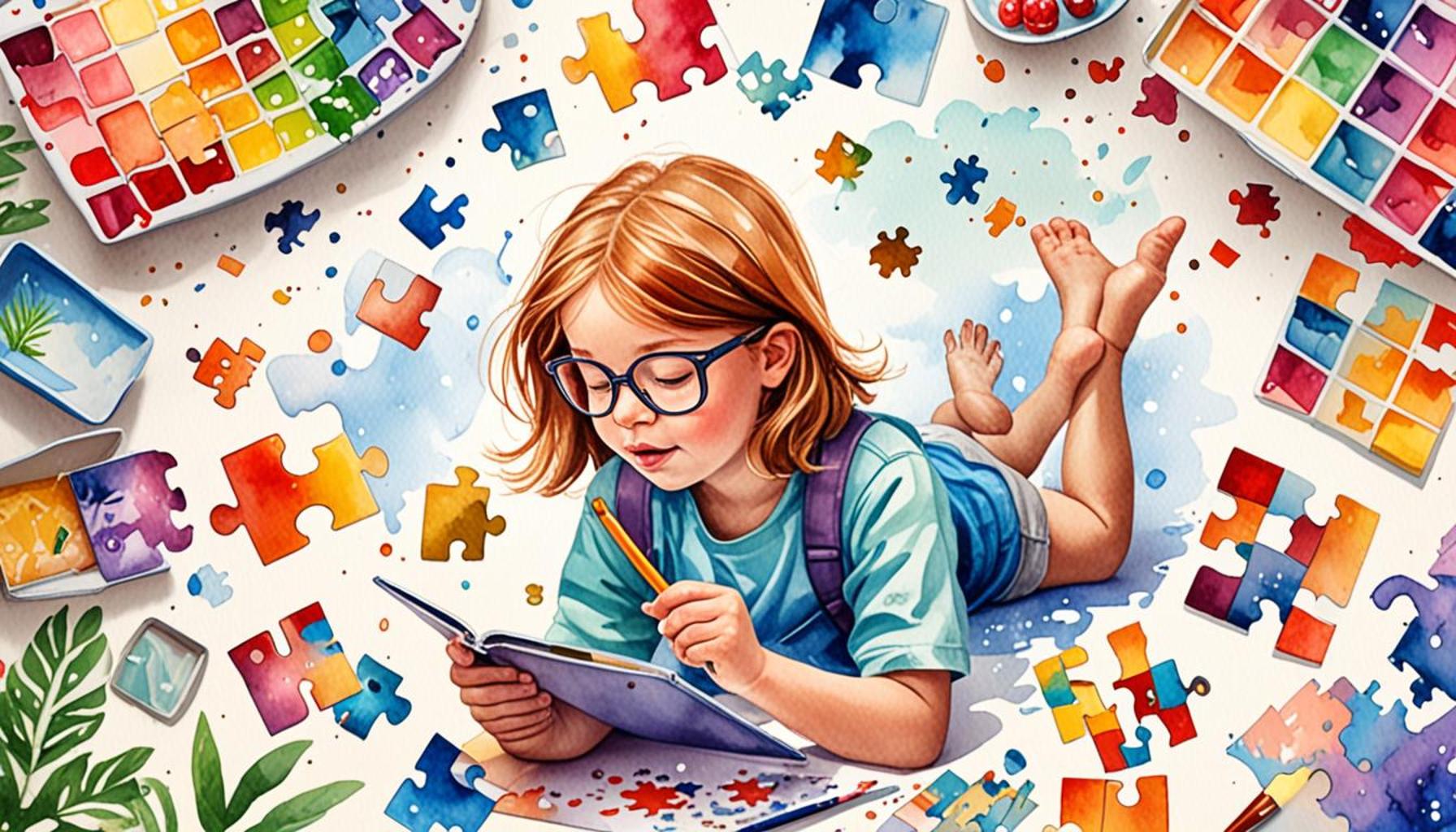
Boost Kids Cognitive Skills The Power of Logic Games in Development

The Mind’s Playground
In today’s fast-paced digital age, fostering cognitive skills in children is more important than ever. With the rapid evolution of technology, children are constantly surrounded by digital stimuli, making it essential to incorporate activities that not only entertain but also educate. Logic games and puzzles are prime examples of such activities. They provide an engaging platform for children to develop crucial cognitive abilities while having fun. By introducing these games early on, children can learn to navigate challenges effectively, which will benefit them throughout their lives.
Why Logic Games Matter
Logic puzzles and games come in a myriad of forms, including interactive apps, board games, and online challenges, each offering enriching experiences. The benefits of engaging with these games are multifaceted and profound:
- Enhances critical thinking by requiring strategic thought—children must analyze situations and make calculated decisions, fostering foresight and judgment.
- Promotes resilience through problem-solving challenges—facing obstacles teaches perseverance and adaptability, encouraging a can-do attitude.
- Boosts memory and concentration, which are underpinned by repeat play—the repetitive nature of games strengthens mental acuity and information retention.
Parents and educators alike are increasingly recognizing the significant impact of these games on children’s learning journeys. Studies have shown that early engagement with logic puzzles can lead to better academic performance and improve overall IQ levels. In the following sections, we will explore the Top 5 logic games that promise to nurture cognitive skills while providing hours of fun. Stay tuned to discover how these games can transform learning into an exciting adventure, encouraging children to think outside the box and prepare them for future challenges. By delving into these top selections, readers are invited to explore what the world of logic games can offer.
DIVE DEEPER: Click here to discover fun cognitive test games
The Importance of Logic Games in Developing Cognitive Skills in Children
Logic games and puzzles are not merely a source of entertainment; they play a crucial role in childhood development. Engaging children in logic games can significantly enhance their cognitive abilities, equipping them with essential skills that will benefit them throughout their lives. This article presents a ranked list of the top five reasons why logic games are indispensable in cultivating cognitive skills in young minds.

5. Enhancing Problem-Solving Skills
Logic games invite children to grapple with various challenges, prompting them to think strategically and critically. As young minds dive into puzzles such as Sudoku or labyrinthine mazes, they learn to identify problems, consider various solutions, and anticipate possible outcomes. These cognitive exercises immerse children in active problem-solving, nurturing a resilient mindset where they perceive challenges as opportunities for learning rather than insurmountable obstacles.
The art of problem-solving is a vital skill for children as it translates into everyday decision-making. Improved problem-solving abilities allow children to assess situations, weigh their options, and make informed choices. Moreover, as they encounter difficulties, they develop persistence and an inclination to explore multiple avenues before arriving at a solution, which is a testament to their growing creativity. In a rapidly changing world, such skills are indispensable, empowering children to navigate life’s complexities with confidence.
Benefits of Enhanced Problem-Solving Skills
- Improved decision-making abilities: The capacity to analyze situations and make sound decisions is cultivated.
- Developing persistence in the face of difficulties: Children learn to approach challenges with tenacity and patience.
- Encouraging creativity in finding solutions: Encourages innovative approaches and lateral thinking.
4. Boosting Memory and Concentration
The nature of logic games inherently requires children to engage their memory capabilities, as they often need to remember sequences, rules, and patterns. Games like memory match cards and logic grids compel children to recall prior moves and predict potential outcomes, helping strengthen their brains’ ability to retain information. This memory enhancement is crucial, as it not only benefits academic performance but also increases attention spans in educational settings.
An improved memory can open doors to a world of knowledge. As children train their brains to remember more effortlessly, they can handle learning tasks more efficiently, bringing about commendable improvements in the classroom. Whether it’s remembering historical dates, mathematical formulas, or vocabulary words, a sharp memory proves advantageous across all subjects.
The Role of Memory Expansion in Development
- Strengthened memory retention: Enhances the child’s ability to retain and recall information swiftly.
- Improved focus on tasks: Children learn to maintain attention for extended periods.
- Better academic performance overall: Reflects in improved grades and a positive learning attitude.
3. Facilitating Critical Thinking
Logic games are meticulously structured to promote critical thinking skills. Children are often required to analyze data, draw reasonable conclusions, and reason through complex scenarios. Games challenging children to put pieces together, such as jigsaw puzzles, necessitate the use of deduction and inference. By engaging in these activities, children enhance their capacity to evaluate different perspectives and conduct thorough analyses that are crucial for intellectual growth.
The impact of such critical thinking extends beyond leisure activities; it molds children into independent thinkers capable of questioning, validating, and constructing coherent arguments. As they grow, these thought processes become intrinsic, enabling them to tackle academic challenges effectively and forge rational solutions in real life.
Impact of Critical Thinking on Childhood Development
- Encouraged independent thought: Fosters self-reliance and a questioning nature.
- Greater ability to validate arguments: Develops a discerning mind capable of supporting opinions with facts.
- Enhanced reasoning skills in other subjects: Benefits all areas of learning, from science to humanities.
2. Promoting Social Interaction
Many logic games are designed for multiple players, offering children abundant opportunities for social interaction. Engaging in games like chess, cooperative puzzles, and board games emphasizes the importance of teamwork, communication, and camaraderie. Such experiences are pivotal in developing emotional intelligence, fostering empathy, and understanding social dynamics. Children learn to negotiate, share, and handle conflicts healthily.
The social skills gained through gaming transcend beyond friendships, as children learn to work collaboratively and appreciate differing viewpoints. They develop the ability to articulate their thoughts and emotions effectively and mature into well-rounded individuals capable of building strong interpersonal relationships.
Social Skills Developed Through Games
- Improved communication skills: Children learn to express themselves and listen actively.
- Better conflict resolution strategies: They gain experience maneuvering through disagreements amicably.
- Enhanced ability to work in teams: Collaboration becomes second nature, preparing them for future group endeavors.
1. Encouraging Logical and Abstract Thinking
At the pinnacle of cognitive development lies the ability to think logically and abstractly. Logic games challenge children to grasp multifaceted concepts, enabling them to ascend from basic comprehension to advanced intellectual engagement. By engaging in games that require interpreting symbols, deciphering codes, or adhering to abstract rules, children fortify their logical reasoning abilities. This foundational skill is a catalyst for academic triumph and a necessary tool for real-world problem-solving.
Logical and abstract thinking encourage analytical prowess and mental agility. As children refine these skills, they are better equipped for future pursuits in science, technology, engineering, and mathematics (STEM) fields. Moreover, these cognitive abilities position them to tackle real-life challenges with a level-headed approach, fostering confidence as they navigate the complexities of adulthood.
Long-Term Benefits of Logical Thinking
- Cultivated analytical skills: Encourages precision in thought and evaluation.
- Preparedness for STEM fields: Provides a robust foundation for studies in science, technology, engineering, and mathematics.
- Enhanced ability to face real-life challenges with confidence: Equips children with the tools needed for independent problem-solving.
In conclusion, the importance of logic games in developing cognitive skills in children cannot be overstated. These games offer a well-rounded approach to enhancing cognitive, social, and emotional growth, creating versatile and capable individuals. From nurturing problem-solving abilities to fostering social interactions, logic games present a comprehensive toolkit for cultivating young minds. Prioritizing these activities may well be the key to unlocking a child’s potential for a bright and successful future.
| Category | Details |
|---|---|
| Cognitive Development | Engaging in logic games encourages critical thinking and problem-solving skills, which are essential for cognitive growth. |
| Social Skills | Playing logic games often involves collaboration and communication with peers, enhancing social interaction. |
| Emotional Balance | Regular participation in logic games helps children manage stress and develop patience as they navigate challenges. |
| Academic Performance | Studies show that children who engage in logic exercises often see an improvement in their math skills and logical reasoning, contributing to better academic outcomes. |
Exploring the various dimensions in which logic games influence children reveals a multifaceted approach to their growth. A significant advantage is seen in the realm of cognitive development. When children engage in these games, they are not merely entertained; they are actively honing their critical thinking and problem-solving skills. Through challenges that require analysis and strategic planning, children learn to assess situations, consider multiple solutions, and ultimately make informed decisions.Moreover, logic games foster essential social skills. Many of these games encourage children to collaborate, strategize, and communicate with their peers. In this collaborative environment, children learn the value of teamwork and the importance of sharing perspectives. As kids negotiate rules and develop strategies, they enhance their ability to interact socially, making these games invaluable for personal growth.Emotional balance is another critical area where logic games make an impact. As children face the inevitable ups and downs of gameplay, they cultivate resilience and learn to manage their emotions. The process of navigating wins and losses instills in them a sense of patience and the importance of perseverance, invaluable traits that aid their emotional development.Finally, the link between logic games and improved academic performance is well-documented. Engaging with logic puzzles and strategy games correlates positively with enhanced mathematical abilities and logical reasoning skills. Such improvement not only boosts a child’s confidence but also lays a strong foundation for future academic success, making these games a worthwhile addition to any child’s learning toolkit.
DISCOVER MORE: Click here to uncover effective strategies
Frequently Asked Questions About the Importance of Logic Games in Developing Cognitive Skills in Children
How do logic games contribute to a child’s cognitive development?
Logic games are a powerful tool in boosting a child’s cognitive development as they challenge young minds to think critically and solve problems. By engaging in these activities, children learn to approach situations from different angles, improving their ability to analyze and synthesize information. Moreover, logic games often require the application of memory, concentration, and spatial reasoning, which are crucial skills for academic and everyday success.
Are there specific types of logic games that are particularly beneficial for children?
Indeed, various types of logic games offer different benefits. Puzzles, such as jigsaw puzzles and Sudoku, enhance spatial awareness and pattern recognition. Strategy games, like chess and checkers, foster strategic thinking and foresight. Meanwhile, games like memory cards or logic riddles improve memory retention and cognitive flexibility. Each type serves to reinforce a unique set of cognitive skills, making a diverse range of logic games highly beneficial for holistic cognitive growth.
At what age should children start playing logic games to maximize benefits?
Children can start benefiting from logic games at a young age, with potential benefits being observable as early as preschool. Simple games, such as matching or sorting activities, can be introduced during the toddler years. As children grow, more complex games can be integrated into their routine to continuously enhance cognitive abilities. There’s no strict age limit, as even older children and teenagers can gain from the ongoing cognitive stimulation provided by logic games.
How can parents effectively incorporate logic games into their child’s routine?
Integrating logic games into a child’s routine can be both fun and beneficial. Parents can set aside regular game times to create a balanced schedule that includes both educational and recreational activities. Encouraging family participation in logic games can also enhance social skills and make learning enjoyable. Keeping an open dialogue about the games and what the child is learning can further help parents understand and support their child’s cognitive development journey.
Do logic games have any impact on a child’s academic performance?
Yes, engaging with logic games can positively impact a child’s academic performance. By strengthening essential skills such as problem-solving, critical thinking, and concentration, logic games prepare children for complex academic tasks. Studies suggest that children who regularly play these games often exhibit better performance in subjects requiring analytical skills, such as mathematics and science. However, it’s important to balance game time with traditional study methods for optimal academic growth.
DISCOVER MORE: Click here to unlock the secrets of brain teasers
Conclusion
Exploring the world of mind games and puzzles reveals their undeniable significance in shaping the cognitive abilities of children. Throughout the article, we’ve delved into how these activities serve not just as sources of entertainment, but as powerful tools to enhance brain function. By engaging in logic games, children are able to nurture critical thinking, problem-solving, and decision-making skills that will be invaluable in their future endeavors.
One of the most compelling aspects is the role these games play in fostering patience and perseverance. Through trial and error, children learn resilience and the importance of strategizing. Additionally, mind games encourage creative thinking as they often require novel approaches to challenges, promoting flexibility in thought processes.
The social aspect of logic games cannot be overlooked either, as many puzzles are designed for collaborative problem-solving, thereby improving communication and teamwork skills. Moreover, the interactive nature of these activities can lead to enhanced memory and concentration, making them an integral part of a balanced cognitive development strategy.
In an age where digital distractions are ever-present, the call to integrate mind games and puzzles into the daily routines of children becomes even clearer. The benefits extend beyond just improving intelligence; they cultivate a lifelong love for learning and curiosity. As parents, educators, and policymakers look towards future educational methods, incorporating these activities can offer a valuable, holistic approach to developing a child’s cognitive capabilities.
The journey into understanding the impact of mind games may lead to uncovering deeper insights into educational psychology and child development, making it an area worthy of further exploration and appreciation.